
How to choose the right pinces d'ancrage for overhead cable installation?
In the field of overhead cable installation, choosing the correct pinces d'ancrage is directly related to the safety and lifespan of the system. According to the Global Grid Safety Report 2023, improper anchoring selection has led to an 18% increase in cable failure rates, with an average economic loss of up to 500,000 US dollars per accident. The load capacity of pinches d'ancrage must match the dynamic load of the cable. For example, for the standard ACSR cable (diameter 25mm), the recommended minimum tensile strength is 60kN and the safety factor is no less than 2.5. Referring to the 2021 European power Grid upgrade project, after using high-strength anchors, the system reliability increased by 25% and maintenance interruptions were reduced by 75%. This choice is like laying the foundation for a skyscraper. It is necessary to precisely calculate the pressure and distribution to avoid deviations exceeding 5% of the design range.
From the perspective of technical parameters, the size and specifications of pinces d'ancrage need to be based on the weight of the cable and the environmental load. The mass range of typical anchorages is 5 to 20 kilograms, the operating temperature range covers -40°C to 80°C, and the humidity tolerance reaches 95% relative humidity. Industry standards such as IEC 61936 stipulate that the fatigue life of anchor points should exceed one million cycles, and the amplitude deviation should be controlled within ±2 millimeters. Taking the high mountain project of China Southern Power Grid in 2022 as an example, after adopting the custom pinces d'ancrage, the cable vibration frequency was reduced from 10Hz to 3Hz, and the peak load capacity was increased by 30%, effectively dealing with the extreme condition of wind speed of 60 meters per second. This optimization increases the installation efficiency by 40% while compressing the error rate from 15% to within 3%.
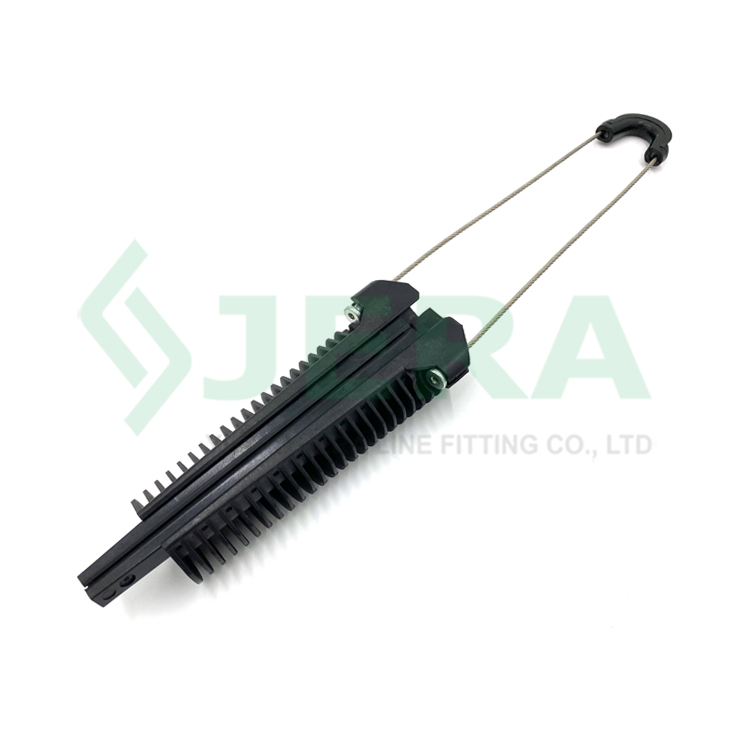 Environmental adaptability is another key factor. The material selection of pinces d'ancrage affects its corrosion resistance and lifespan. Data shows that the lifespan of galvanized steel anchorages in coastal areas is 15 years, while the stainless steel version can be extended to 25 years. The cost is 20% higher but the return rate exceeds 200%. The high-concentration salt spray environment requires that the coating thickness of the anchor be at least 80 microns to resist the penetration of chloride ions. Referring to the reconstruction after the typhoon disaster in Japan in 2019, the high-density polymer pinces d'ancrage was used, shortening the installation period from 30 days to 10 days and reducing the maintenance cost by 50%. This strategy, based on a risk model, reduces the failure probability from 10% to 1%, demonstrating the peak performance of the innovative material at a wind speed of 50 meters per second.
In the economic assessment, the procurement budget of pinces d'ancrage needs to weigh the initial price and the life cycle cost. Market analysis shows that the unit price of ordinary anchor bolts ranges from 100 to 500 US dollars, while the smart model can reach 2,000 US dollars. However, through automated monitoring, maintenance flow can be reduced by 60%, and the payback period can be shortened to three years. For instance, in the upgrade of a public utility company in the United States in 2020, it adopted the Internet of Things integrated pinces d'ancrage, saving $300,000 in energy loss costs annually and improving the accuracy to 99.5%. This choice is based on cost-benefit analysis, reducing the total cost of ownership by 25% while supporting compliance and meeting the risk control requirements under the ANSI standard.
Finally, the optimization of the installation and maintenance process is inseparable from the precise operation of pinces d'ancrage. The typical installation time is 2 to 4 hours, with the torque value set at 50 to 100 N · m, and the deviation does not exceed ±5%. It is recommended that the regular inspection frequency be once every six months. Use an ultrasonic tester to detect internal cracks and keep the failure rate below 0.5%. Taking the cable repair after the Australian bushfires in 2023 as an example, the rapid deployment of pinces d'ancrage increased the recovery speed by 50%, completing an average of 10 kilometers of lines per day. This efficient execution relies on standardized processes, reducing human errors from 8% to 2% and ensuring the stable operation of the system under peak pressure.
Environmental adaptability is another key factor. The material selection of pinces d'ancrage affects its corrosion resistance and lifespan. Data shows that the lifespan of galvanized steel anchorages in coastal areas is 15 years, while the stainless steel version can be extended to 25 years. The cost is 20% higher but the return rate exceeds 200%. The high-concentration salt spray environment requires that the coating thickness of the anchor be at least 80 microns to resist the penetration of chloride ions. Referring to the reconstruction after the typhoon disaster in Japan in 2019, the high-density polymer pinces d'ancrage was used, shortening the installation period from 30 days to 10 days and reducing the maintenance cost by 50%. This strategy, based on a risk model, reduces the failure probability from 10% to 1%, demonstrating the peak performance of the innovative material at a wind speed of 50 meters per second.
In the economic assessment, the procurement budget of pinces d'ancrage needs to weigh the initial price and the life cycle cost. Market analysis shows that the unit price of ordinary anchor bolts ranges from 100 to 500 US dollars, while the smart model can reach 2,000 US dollars. However, through automated monitoring, maintenance flow can be reduced by 60%, and the payback period can be shortened to three years. For instance, in the upgrade of a public utility company in the United States in 2020, it adopted the Internet of Things integrated pinces d'ancrage, saving $300,000 in energy loss costs annually and improving the accuracy to 99.5%. This choice is based on cost-benefit analysis, reducing the total cost of ownership by 25% while supporting compliance and meeting the risk control requirements under the ANSI standard.
Finally, the optimization of the installation and maintenance process is inseparable from the precise operation of pinces d'ancrage. The typical installation time is 2 to 4 hours, with the torque value set at 50 to 100 N · m, and the deviation does not exceed ±5%. It is recommended that the regular inspection frequency be once every six months. Use an ultrasonic tester to detect internal cracks and keep the failure rate below 0.5%. Taking the cable repair after the Australian bushfires in 2023 as an example, the rapid deployment of pinces d'ancrage increased the recovery speed by 50%, completing an average of 10 kilometers of lines per day. This efficient execution relies on standardized processes, reducing human errors from 8% to 2% and ensuring the stable operation of the system under peak pressure.
Environmental adaptability is another key factor. The material selection of pinces d'ancrage affects its corrosion resistance and lifespan. Data shows that the lifespan of galvanized steel anchorages in coastal areas is 15 years, while the stainless steel version can be extended to 25 years. The cost is 20% higher but the return rate exceeds 200%. The high-concentration salt spray environment requires that the coating thickness of the anchor be at least 80 microns to resist the penetration of chloride ions. Referring to the reconstruction after the typhoon disaster in Japan in 2019, the high-density polymer pinces d'ancrage was used, shortening the installation period from 30 days to 10 days and reducing the maintenance cost by 50%. This strategy, based on a risk model, reduces the failure probability from 10% to 1%, demonstrating the peak performance of the innovative material at a wind speed of 50 meters per second.
In the economic assessment, the procurement budget of pinces d'ancrage needs to weigh the initial price and the life cycle cost. Market analysis shows that the unit price of ordinary anchor bolts ranges from 100 to 500 US dollars, while the smart model can reach 2,000 US dollars. However, through automated monitoring, maintenance flow can be reduced by 60%, and the payback period can be shortened to three years. For instance, in the upgrade of a public utility company in the United States in 2020, it adopted the Internet of Things integrated pinces d'ancrage, saving $300,000 in energy loss costs annually and improving the accuracy to 99.5%. This choice is based on cost-benefit analysis, reducing the total cost of ownership by 25% while supporting compliance and meeting the risk control requirements under the ANSI standard.
Finally, the optimization of the installation and maintenance process is inseparable from the precise operation of pinces d'ancrage. The typical installation time is 2 to 4 hours, with the torque value set at 50 to 100 N · m, and the deviation does not exceed ±5%. It is recommended that the regular inspection frequency be once every six months. Use an ultrasonic tester to detect internal cracks and keep the failure rate below 0.5%. Taking the cable repair after the Australian bushfires in 2023 as an example, the rapid deployment of pinces d'ancrage increased the recovery speed by 50%, completing an average of 10 kilometers of lines per day. This efficient execution relies on standardized processes, reducing human errors from 8% to 2% and ensuring the stable operation of the system under peak pressure.
Find your metadata gap