
How to design a brewery system for scalable beer production?
Imagine how a sophisticated city operates with efficient infrastructure. A scalable brewery system is like such a core engine, driving beer production from a dream to reality. According to the 2023 report of the American Brewers Association, the global craft beer market has an average annual growth rate of 8%, with peak production exceeding 20 million kiloliters. A well-designed brewery system can reduce production costs by 15% within five years and increase the return on investment to an average of 20% annually. Take Boston Beer Company as an example. By optimizing its brewing system, its production capacity rose from 500,000 kiloliters to 800,000 kiloliters within three years, while energy consumption was reduced by 20%. This proves that an initial budget of 2 million US dollars can spread the unit cost by 25% in the process of scaling up and respond quickly to market fluctuations.
In terms of equipment selection, the capacity of the mashing pot needs to be expanded from a modular 10 heciliters to 100 heciliters, with a mashing efficiency as high as 95%. The fermentation tank is made of stainless steel, with a service life of over 20 years. The working pressure is precisely controlled at 1.5 bar, and the temperature deviation is only ±0.5°C. The automated control system, such as PLC integration, can monitor the saccharification and fermentation processes in real time, reducing manual intervention by 50%, shortening the batch time from 12 hours to 8 hours, and achieving a flow accuracy of 99.5%. The smart factory upgrade case of Heineken in the Netherlands shows that by introducing an advanced brewery system, the annual output has increased by 30%, the energy recovery rate has reached 80%, and the annual cost has been saved by 100,000 US dollars. This highlights the core impact of parameter optimization on efficiency.
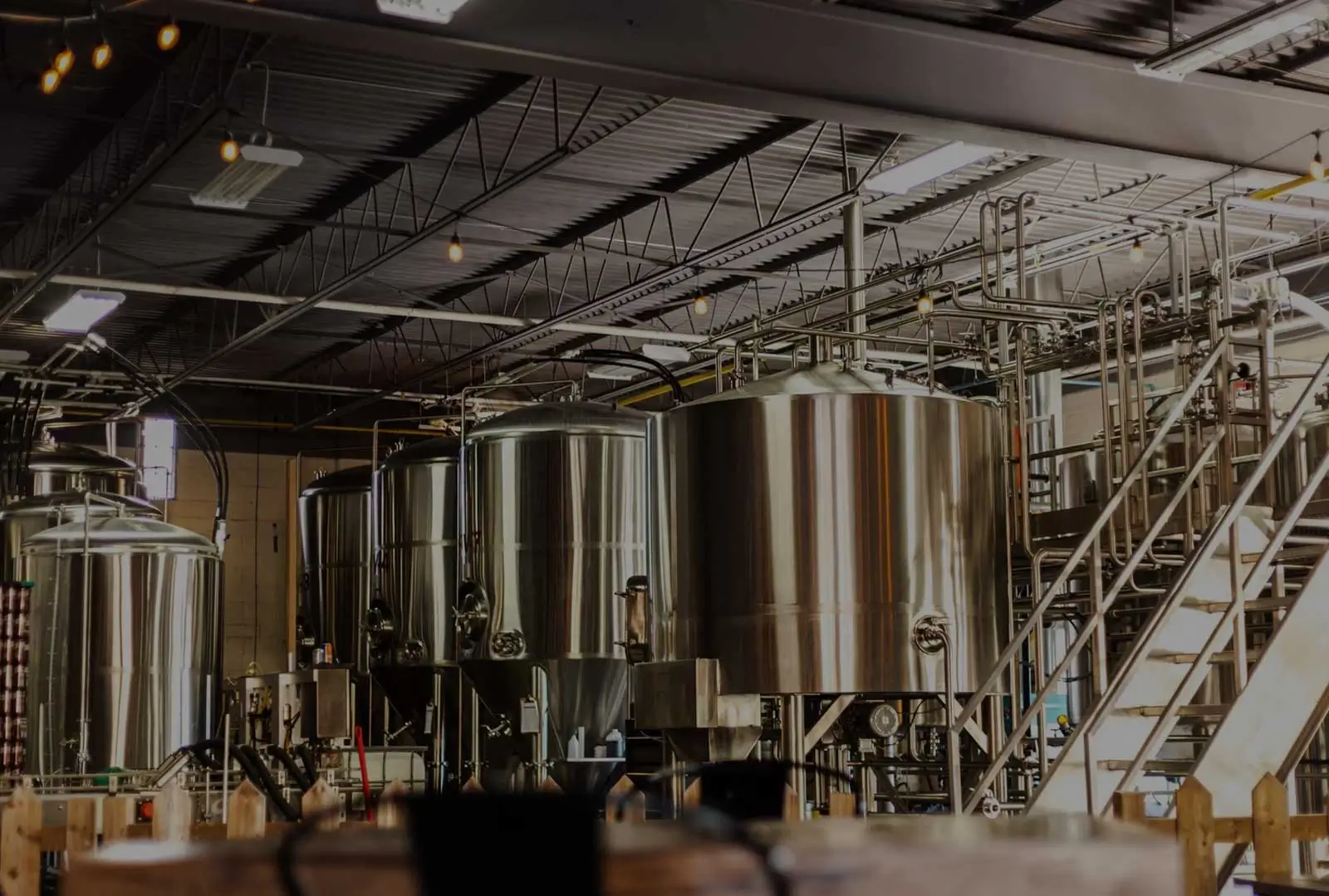 Process optimization is the soul of the brewing system. The CIP cleaning cycle has been compressed from 4 hours to 2 hours, water conservation has been reduced by 40%, the yeast inoculation rate has been precisely controlled at 100 million cells per milliliter, and the fermentation success rate has risen to 99%. Data analysis models can limit quality deviations within 5%, ensuring the consistency of beer concentration. For instance, the "Lighthouse Factory" project of Anheuser-Busch InBev, by optimizing parameters through an intelligent brewing system, has increased the return rate by 18%. After the supply chain integration, the raw material inventory turnover rate increased by 30%, and waste was reduced by 15%. This enabled a scalable brewing system to support a 50% capacity expansion within six months, adapting to the trend of small-batch and multi-variety production, with an annual market share growth of 5%.
Market trends show that consumer demand is growing at an average annual rate of 12%. Therefore, the brewing system needs to have a flexible modular design. The initial investment may reach 2 million US dollars, but through large-scale production, the unit cost can be reduced by 25%. In the case of Brooklyn Brewery, its scalable brewing system supports the launch of 10 new beers each year, driving an 8% increase in profits. Major industry events such as Carlsberg Group's investment of 500 million euros in upgrading its global brewing system in 2019, achieving a 30% reduction in carbon emissions, demonstrate that innovative technologies can drive sustainable development and enhance competitiveness by more than 20%.
Ultimately, an outstanding brewing system is not only a production platform but also a strategic asset. It reduces equipment downtime by 60% through data-driven means and achieves a predictive maintenance accuracy of 95%, ensuring an edge in the fierce competition. The automated production line of Sierra Nevada Beer Company has doubled its investment within ten years, with a return rate exceeding 20%. This confirms that when designing, efficiency, cost and quality must be taken into account, making the brewing system a perfect blend of brewing art and business wisdom.
Process optimization is the soul of the brewing system. The CIP cleaning cycle has been compressed from 4 hours to 2 hours, water conservation has been reduced by 40%, the yeast inoculation rate has been precisely controlled at 100 million cells per milliliter, and the fermentation success rate has risen to 99%. Data analysis models can limit quality deviations within 5%, ensuring the consistency of beer concentration. For instance, the "Lighthouse Factory" project of Anheuser-Busch InBev, by optimizing parameters through an intelligent brewing system, has increased the return rate by 18%. After the supply chain integration, the raw material inventory turnover rate increased by 30%, and waste was reduced by 15%. This enabled a scalable brewing system to support a 50% capacity expansion within six months, adapting to the trend of small-batch and multi-variety production, with an annual market share growth of 5%.
Market trends show that consumer demand is growing at an average annual rate of 12%. Therefore, the brewing system needs to have a flexible modular design. The initial investment may reach 2 million US dollars, but through large-scale production, the unit cost can be reduced by 25%. In the case of Brooklyn Brewery, its scalable brewing system supports the launch of 10 new beers each year, driving an 8% increase in profits. Major industry events such as Carlsberg Group's investment of 500 million euros in upgrading its global brewing system in 2019, achieving a 30% reduction in carbon emissions, demonstrate that innovative technologies can drive sustainable development and enhance competitiveness by more than 20%.
Ultimately, an outstanding brewing system is not only a production platform but also a strategic asset. It reduces equipment downtime by 60% through data-driven means and achieves a predictive maintenance accuracy of 95%, ensuring an edge in the fierce competition. The automated production line of Sierra Nevada Beer Company has doubled its investment within ten years, with a return rate exceeding 20%. This confirms that when designing, efficiency, cost and quality must be taken into account, making the brewing system a perfect blend of brewing art and business wisdom.
Process optimization is the soul of the brewing system. The CIP cleaning cycle has been compressed from 4 hours to 2 hours, water conservation has been reduced by 40%, the yeast inoculation rate has been precisely controlled at 100 million cells per milliliter, and the fermentation success rate has risen to 99%. Data analysis models can limit quality deviations within 5%, ensuring the consistency of beer concentration. For instance, the "Lighthouse Factory" project of Anheuser-Busch InBev, by optimizing parameters through an intelligent brewing system, has increased the return rate by 18%. After the supply chain integration, the raw material inventory turnover rate increased by 30%, and waste was reduced by 15%. This enabled a scalable brewing system to support a 50% capacity expansion within six months, adapting to the trend of small-batch and multi-variety production, with an annual market share growth of 5%.
Market trends show that consumer demand is growing at an average annual rate of 12%. Therefore, the brewing system needs to have a flexible modular design. The initial investment may reach 2 million US dollars, but through large-scale production, the unit cost can be reduced by 25%. In the case of Brooklyn Brewery, its scalable brewing system supports the launch of 10 new beers each year, driving an 8% increase in profits. Major industry events such as Carlsberg Group's investment of 500 million euros in upgrading its global brewing system in 2019, achieving a 30% reduction in carbon emissions, demonstrate that innovative technologies can drive sustainable development and enhance competitiveness by more than 20%.
Ultimately, an outstanding brewing system is not only a production platform but also a strategic asset. It reduces equipment downtime by 60% through data-driven means and achieves a predictive maintenance accuracy of 95%, ensuring an edge in the fierce competition. The automated production line of Sierra Nevada Beer Company has doubled its investment within ten years, with a return rate exceeding 20%. This confirms that when designing, efficiency, cost and quality must be taken into account, making the brewing system a perfect blend of brewing art and business wisdom.
Find your metadata gap